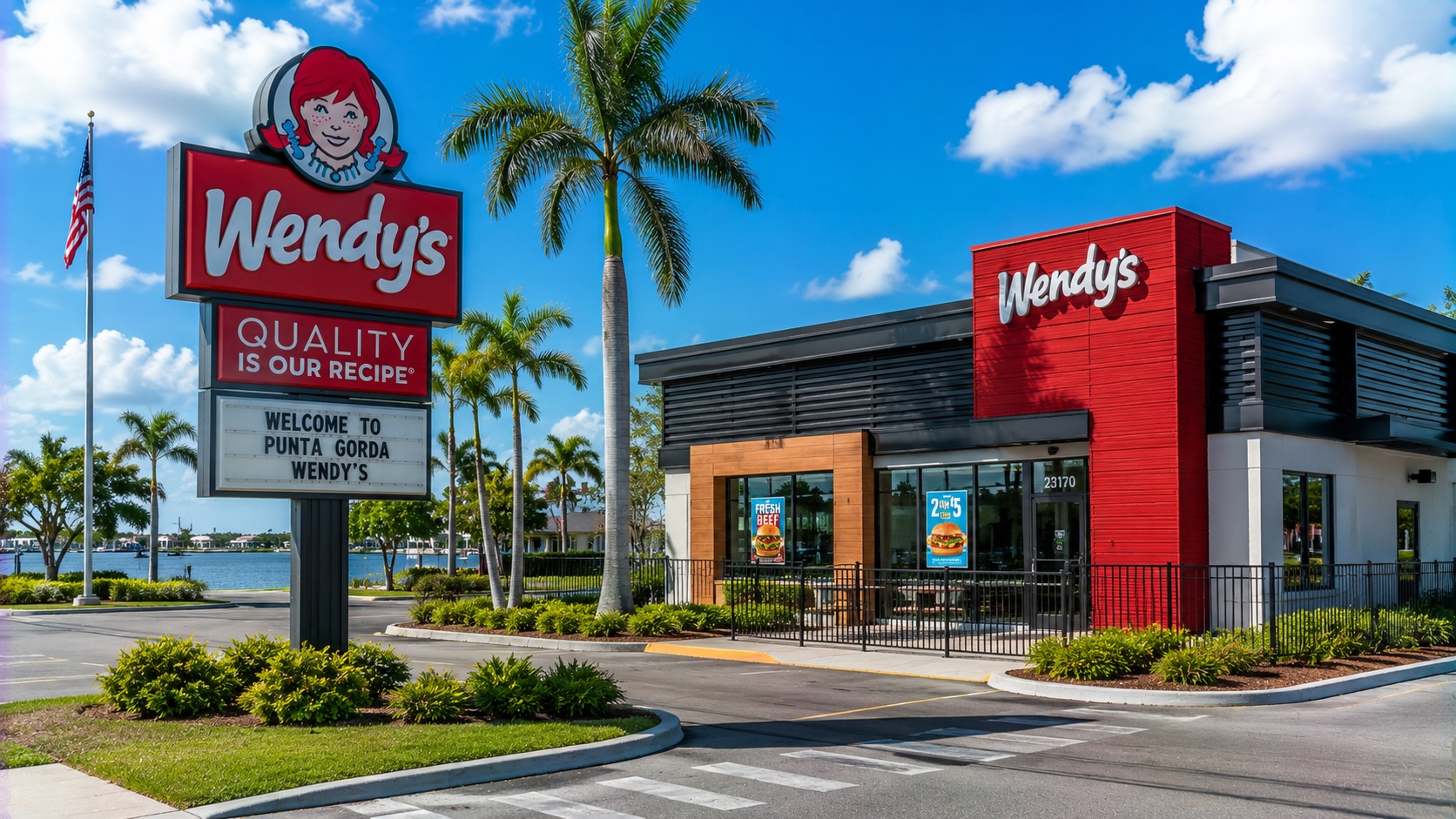
Corporate and franchisee Wendy’s leases, and how to tell the difference, from a buyer’s broker with 5 Wendy’s closings, most recently in March 2026.
A Wendy’s NNN property is a freestanding quick-service restaurant with a drive-thru, leased on a long-term absolute NNN lease, typically 20 years with 10% rent increases every five years. The single most important question is who signs the lease. Most Wendy’s restaurants are run by franchisees, so most Wendy’s NNN properties are backed by a franchisee operator, not by Wendy’s corporate. Corporate Wendy’s leases are rare and trade at a premium. With the parent company rated B+ by S&P and closing underperforming restaurants in 2026, underwriting the operator and the store matters more for Wendy’s than for almost any other QSR tenant, which is exactly where a buyer’s broker earns their keep on a 1031 exchange.
Solid Investments FL has represented buyers on 5 Wendy’s transactions in Florida and Texas, including a rare corporate Wendy’s ground lease in Davie, Florida that closed in March 2026 at a 4.88% cap. See them in our track record. Our buyer representation is always free to you.
| Tenant | Wendy’s corporate (rare) or a franchisee operating company; confirm the tenant and every guarantor on each lease |
|---|---|
| Parent company | The Wendy’s Company (Nasdaq: WEN), Dublin, Ohio |
| Corporate credit | S&P B+, outlook negative (February 2026); franchisee credit varies widely by operator |
| Restaurants | About 6,000 in the U.S. before 2026 closures; the vast majority franchised |
| Typical lease term | 20 years on new leases |
| Lease type | Absolute NNN; ground leases and fee-simple sale-leasebacks both trade |
| Rent increases | Typically 10% every 5 years |
| Renewal options | Multiple 5-year options |
| Typical cap rate (2026) | Corporate: ~4.5%–5.0% (rare). Franchisee: around 5% in Florida (some recently below 5%), about 6% in most other states, depending on the operator |
| Typical price range | About $1.5M–$3.5M |
Credit ratings as of October 2026. Cap rates and pricing reflect current market conditions and vary by deal.
This drives everything. A corporate Wendy’s lease is rare and prices at a premium; most deals are guaranteed by a franchisee. Read exactly who signs the lease and who guarantees it, whether one store’s entity or the operator’s larger company.
Confirm how many units actually back the lease. Franchisees often hold their restaurants in separate subsidiaries, sometimes one entity per store or per small group, so a lease from a large Wendy’s operator may be guaranteed by an entity with only a handful of units. Get the guarantor entity’s unit count and financials, not just the operator’s overall size. In September 2026, Meritage Hospitality, one of the largest Wendy’s franchisees with 314 restaurants, filed Chapter 11, a reminder of why this step matters.
Wendy’s planned to close roughly 5% to 6% of its U.S. restaurants (about 300 to 360) in 2026, focused on underperforming locations. Ask for store-level sales: rent at 6%–8% of sales is healthy and below 6% is very strong; around 10% is close to break-even for many operators. The lower the ratio, the more profitable the store and the more likely the operator renews.
Compare the rent per square foot to what similar restaurant buildings lease for nearby. If the rent is at or below market, you can likely re-lease the building at the same or even a higher rent if the franchisee ever fails. An above-market rent, common on sale-leasebacks, means a rent cut if you ever have to re-lease. With a B+ parent and store closures under way, this is a key protection on any Wendy’s.
Location changes pricing significantly. Franchisee Wendy’s in Florida still list around a 5% cap, and some have recently traded below 5%, while similar deals in most other states trade closer to 6%. Strong markets also make the real estate easier to re-lease.
Most leases include 10% increases every five years. Corner sites with strong traffic, good access and drive-thru stacking are your long-term protection, whoever the tenant is.
We’ve helped buyers close 5 Wendy’s transactions, including two corporate deals in Davie, Florida:
Fast Food / QSR
Fast Food / QSR
Fast Food / QSR
Fast Food / QSR
Fast Food / QSR
Solid Investments FL is a Florida NNN buyer's brokerage headquartered in Lakewood Ranch (Sarasota), serving investors across Florida and nationwide, and has represented buyers on 5 Wendy's transactions, including a rare corporate Wendy's ground lease that closed in March 2026. We help investors and 1031 exchange buyers underwrite both corporate and franchisee Wendy's leases, and our buyer representation is free.
It depends mostly on who signs the lease and where the store is. Corporate Wendy's leases are rare and generally trade around 4.5% to 5.0%; our March 2026 Davie corporate closing traded at 4.88%. Franchisee Wendy's in Florida are still listed around a 5% cap, and some have recently traded below 5%, while franchisee deals in most other states trade closer to 6%.
Then you own the land and the tenant owns the building. The main drawback is that you can't depreciate the building. The upsides: the tenant paid to build the store, so it has a strong vested interest in staying; ground rents are typically at or below market; and in most ground leases the building reverts to the landowner when the tenant vacates or the lease ends (verify it in your lease). That's why ground leases usually trade at lower cap rates.
With a corporate lease, The Wendy's Company or a corporate subsidiary is the tenant. With a franchisee lease, the tenant is the franchise operator, and the rent is only as strong as that operator and any guarantee behind it. Most Wendy's NNN properties are franchisee leases, which is why reviewing the operator's size and financials is essential.
Start with how many restaurants actually back the guarantee. Franchisees often hold their stores in separate subsidiaries, sometimes one entity per store or per small group, so a lease from a large operator may be guaranteed by an entity with only a few units. Next, compare rent to store sales: for quick-service restaurants, rent at 6% to 8% of sales is healthy, below 6% is very strong, and around 10% is close to break-even for many operators. Finally, check rent per square foot against the local market. If the rent is at or below market, you can likely re-lease the building at the same or even a higher rent if the operator ever fails.
S&P rates The Wendy's Company B+, which is below investment grade, and revised its outlook to negative in February 2026 after weaker 2025 results. Franchisee operators are typically not rated, so their strength has to be judged from their size, financial statements and track record.
Yes. Wendy's planned to close roughly 5% to 6% of its U.S. restaurants, about 300 to 360 locations, in 2026, focused on underperforming stores. Separately, franchisee Meritage Hospitality, which operates 314 Wendy's restaurants, filed Chapter 11 in September 2026. Store-level sales and the strength of the operator are the best protection.
New Wendy's NNN leases typically run 20 years with 10% rent increases every five years, followed by multiple 5-year renewal options, with zero landlord obligations on absolute NNN leases.
It can be, with price points from about $1.5 million to $3.5 million. Corporate Wendy's leases offer the most security, while franchisee leases offer higher cap rates but require careful review of the operator, store sales and real estate. A buyer's broker who knows the difference can help you choose the right one for your exchange.
General information only, not investment, tax or legal advice. Credit ratings and market data change; verify current figures before investing.
We’ve closed corporate and franchisee Wendy’s deals and know how to vet the operator. Tell us your budget and timeline; our buyer representation is completely free.
📞 954-296-6955 | 11015 Gatewood Dr Suite 102, Lakewood Ranch, FL 34211